
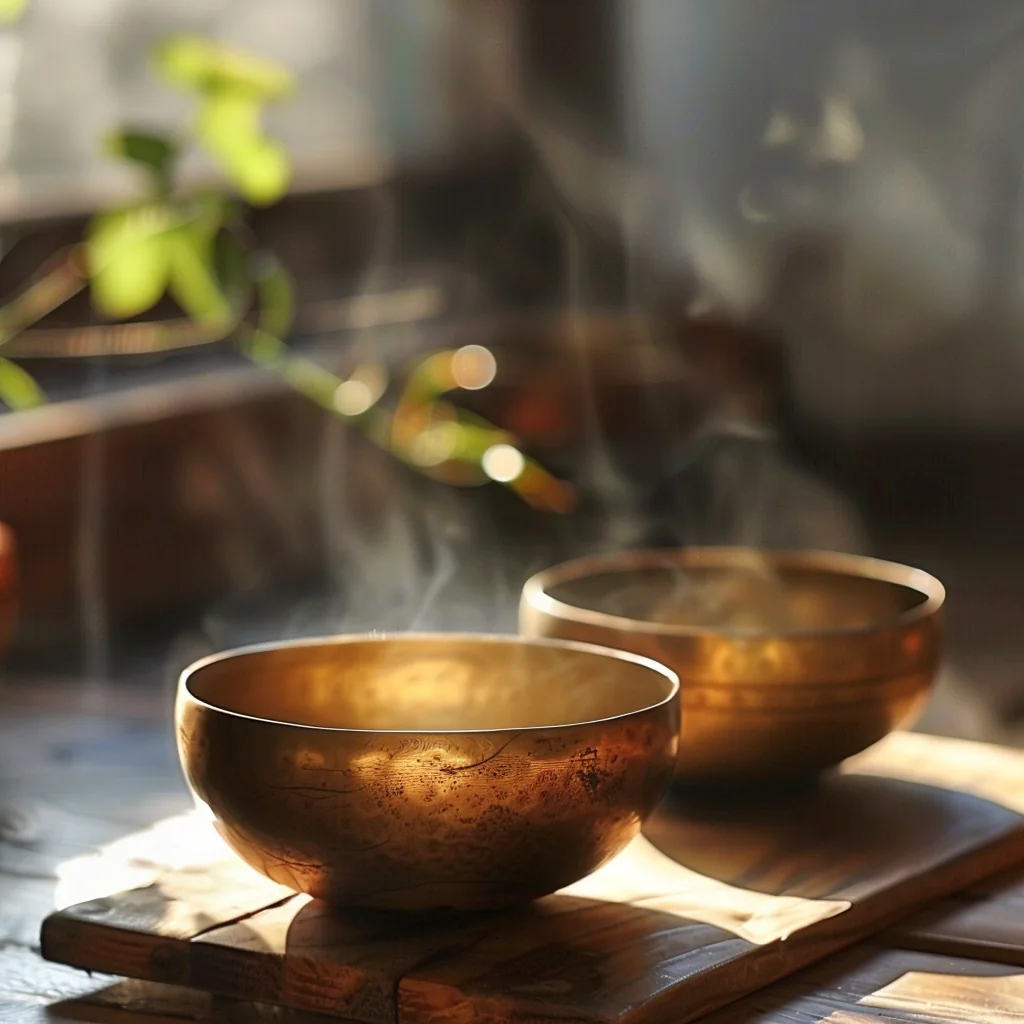
When listening to a singing bowl, you can notice how one strike begins, continues, and slowly fades. This is a simple attention exercise. You do not need to empty your mind or reach a special state. For someone trying it for the first time, clear arrangements for volume and stopping matter more than seeking intense vibration or a long listening period. You should be the person who says whether it feels comfortable.
Use sound as an object of observation and set aside expectations of an effect
Singing-bowl activities may be described as mindfulness, relaxation, or sound-frequency work, and their actual content varies. Find out whether the arrangement involves a live performance, recorded listening, or physical contact. Words such as “frequency” or “resonance” alone cannot establish that an activity can treat illness, adjust brain waves, or clear trauma.
A grounded starting point is to observe what you can hear, whether sitting or lying feels comfortable, and whether you can gently bring your attention back to the sound after your mind wanders. Your experience may change from day to day; there is no need to compare it with anyone else’s.
Consider volume, duration, and distance together
The World Health Organization’s safe-listening information explains that sound level, exposure time, and frequency all affect hearing risk, and recommends lowering the volume, moving away from a sound that is too loud, and taking breaks. These principles also remind us that calling a sound healing music does not remove the need for hearing protection. When the volume is high or a strike is sudden, you should be able to request an adjustment immediately.
Do not treat one decibel number as a comfort guarantee for everyone, and do not decide that a sound is safe because you can endure it until you adapt. You can ask to sit farther away, hear a short demonstration first, or leave the sound environment temporarily. If you already have tinnitus, sound sensitivity, or another ear problem and are unsure whether it is suitable, consult a hearing or healthcare professional first.
Confirm four small things before you begin
- Posture: Can I use a chair, keep my eyes open, or move my body when needed?
- Sound source: Where will the performer and bowl be, and will they move close to my head?
- Consent: Will the bowl be placed on my body, and is another arrangement available if I do not agree?
- Stopping: What words or hand signal should I use if the volume is uncomfortable or I need a break?
If you are not comfortable with a dim room, fragrance, or lying on the floor, say so beforehand. These preferences do not mean that mindfulness is unsuitable for you; they mean you need a different way to participate. If you develop ear pain, dizziness, or any other discomfort during the activity, stop rather than interpreting the symptom as a required energy process.
Build your own rhythm with a short practice
Once you have confirmed that the volume is comfortable, listen for a short section, notice the sound’s rise and fall, and then leave a period of quiet. Breathe naturally; there is no need to hold your breath. When your mind wanders, simply notice, “I am thinking,” and choose to return to the sound or to the feeling of your feet on the floor. This is a self-adjustable introduction, not a treatment procedure.
If you play a recording yourself, start at a low volume and do not keep increasing it just to hear the tail of the sound. Choose a time when you do not also need to drive or perform another safety-sensitive task. A shorter practice that you can end yourself is generally easier to assess than forcing yourself through a long recording.
Notice what you need afterwards and choose the next format
When the sound stops, you do not need to stand up immediately or share a profound insight. First see whether you want to stretch, rest, or sit quietly, then record which tone, distance, and posture felt more comfortable. If tinnitus continues or your hearing seems changed, seek a professional assessment; WHO’s safe-listening information also warns us not to ignore these signs.
For an in-person arrangement, read about singing bowl sound healing. If you want to learn to play and facilitate, see the Tibetan singing bowl healing course. If you prefer a quieter approach, explore mindfulness meditation and contemplative practice and confirm which format better fits your needs.